01
Problem Statement & User Research
Kanji is one of the biggest hurdles in learning Japanese. I surveyed and interviewed 25 people interested in studying the language to find out where — and why — they give up.
Three barriers
Complex Shapes
2,000+ Essential Characters
Overwhelming visual complexity deters beginners before they even start.
Massive Volume
106 Hiragana/Katakana vs 2,000 Kanji
Traditional rote memorization creates an unsustainable cognitive load.
Loss of Motivation
High Drop-off Rate
“Once hobby learning turns into mandatory practice, the brain resists.”
“It was fun at the beginning as a hobby, but once it turns into practice, my brain tries to forget about it.”
Research demographic & results
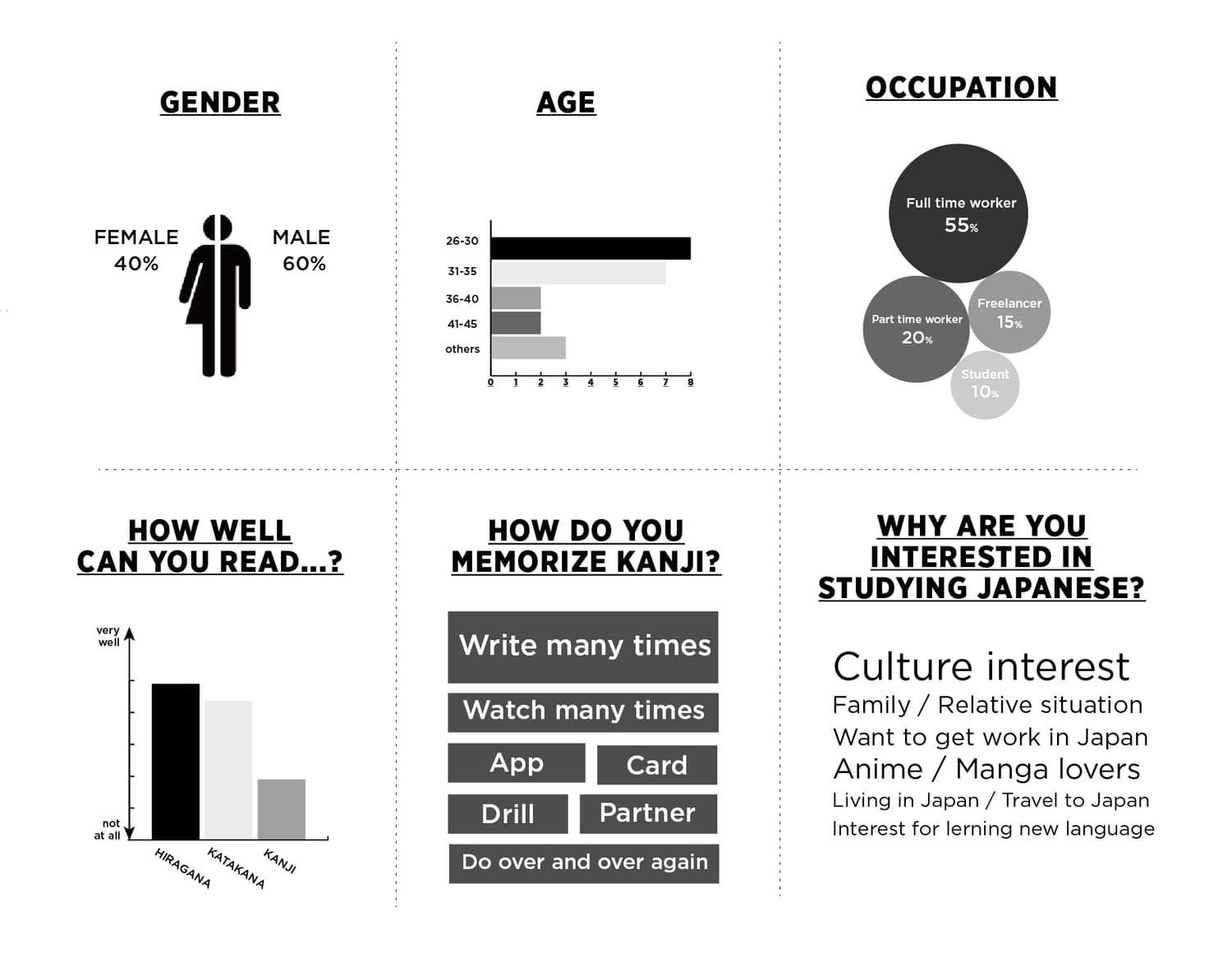
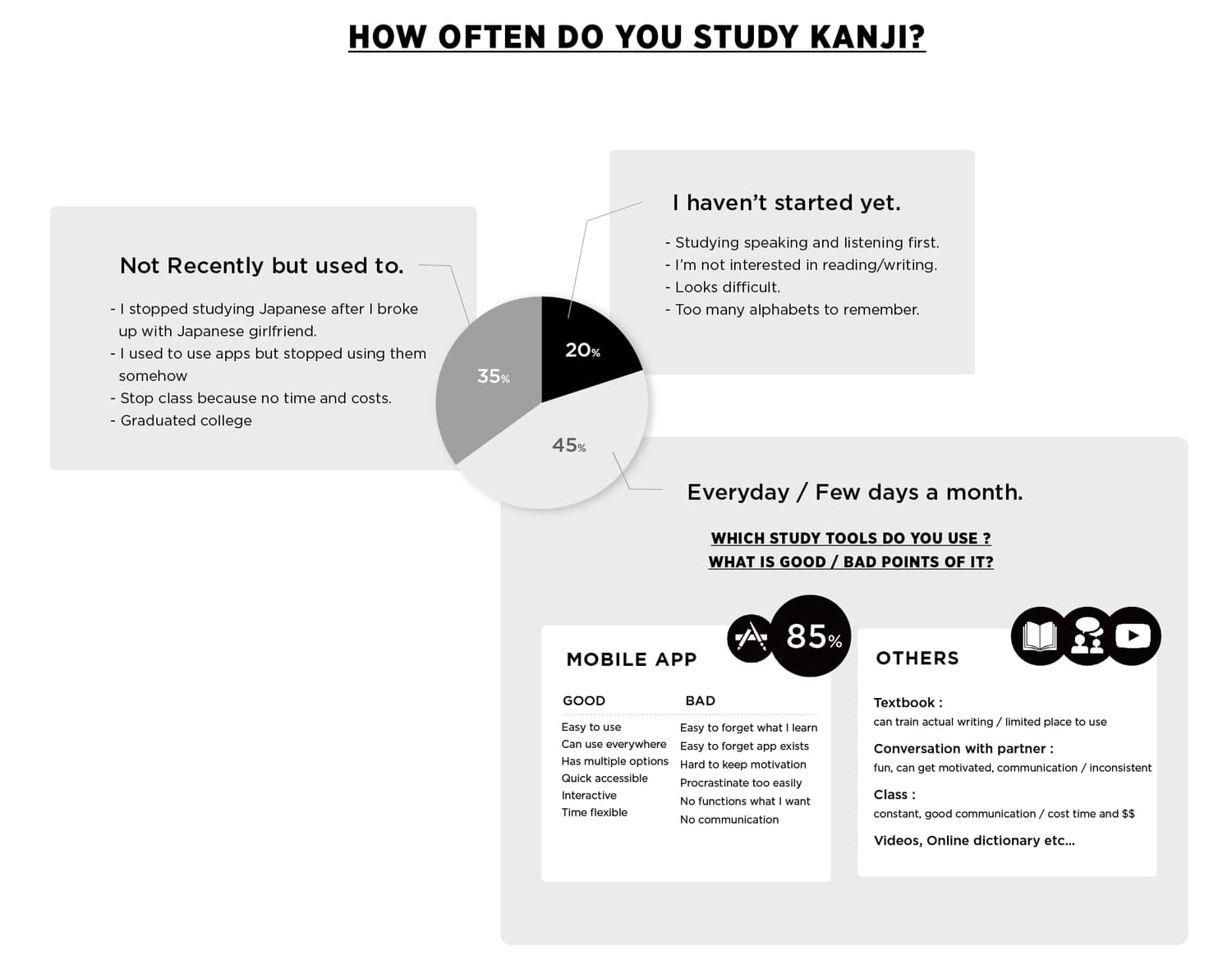
Two kinds of learners
With a specific goal
Without a goal
Personas
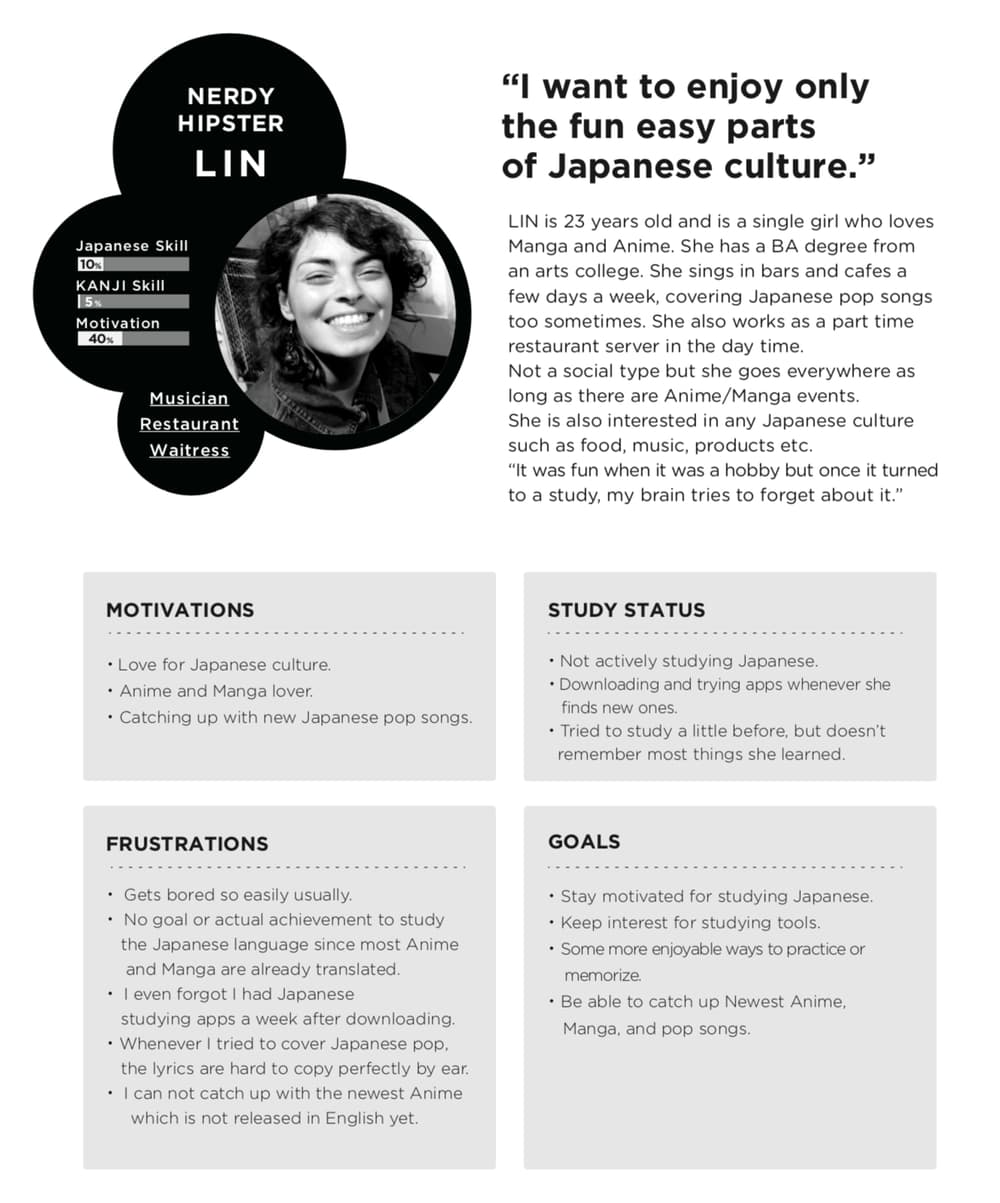
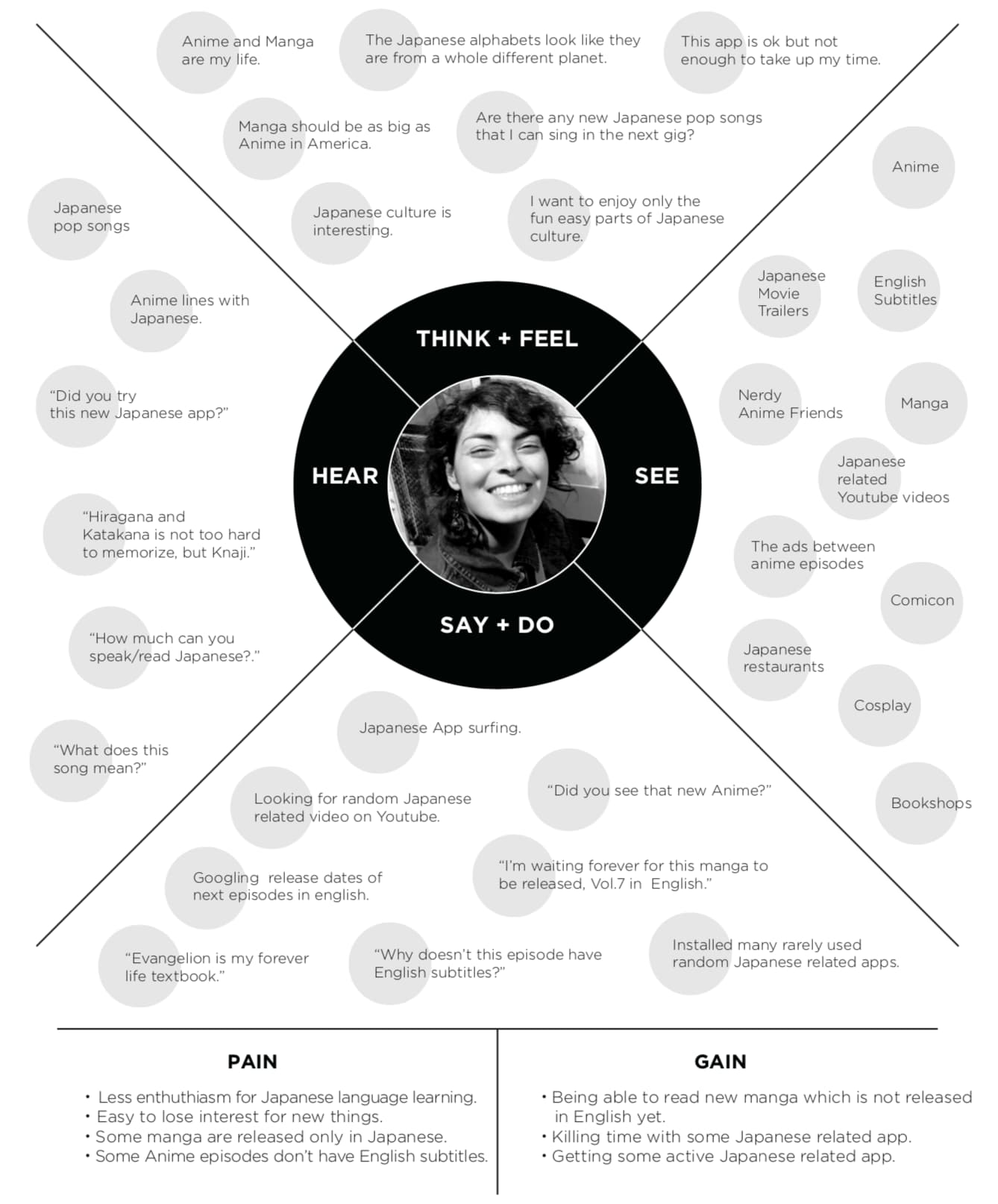
Lin — nerdy hipster, not yet committed. Profile and empathy map.
02
Solution & Linguistic Concept
About 80% of kanji are combinations of a small set of fundamental elements. Learn that core set — roughly 20% — and the rest becomes a puzzle you already have the pieces for.
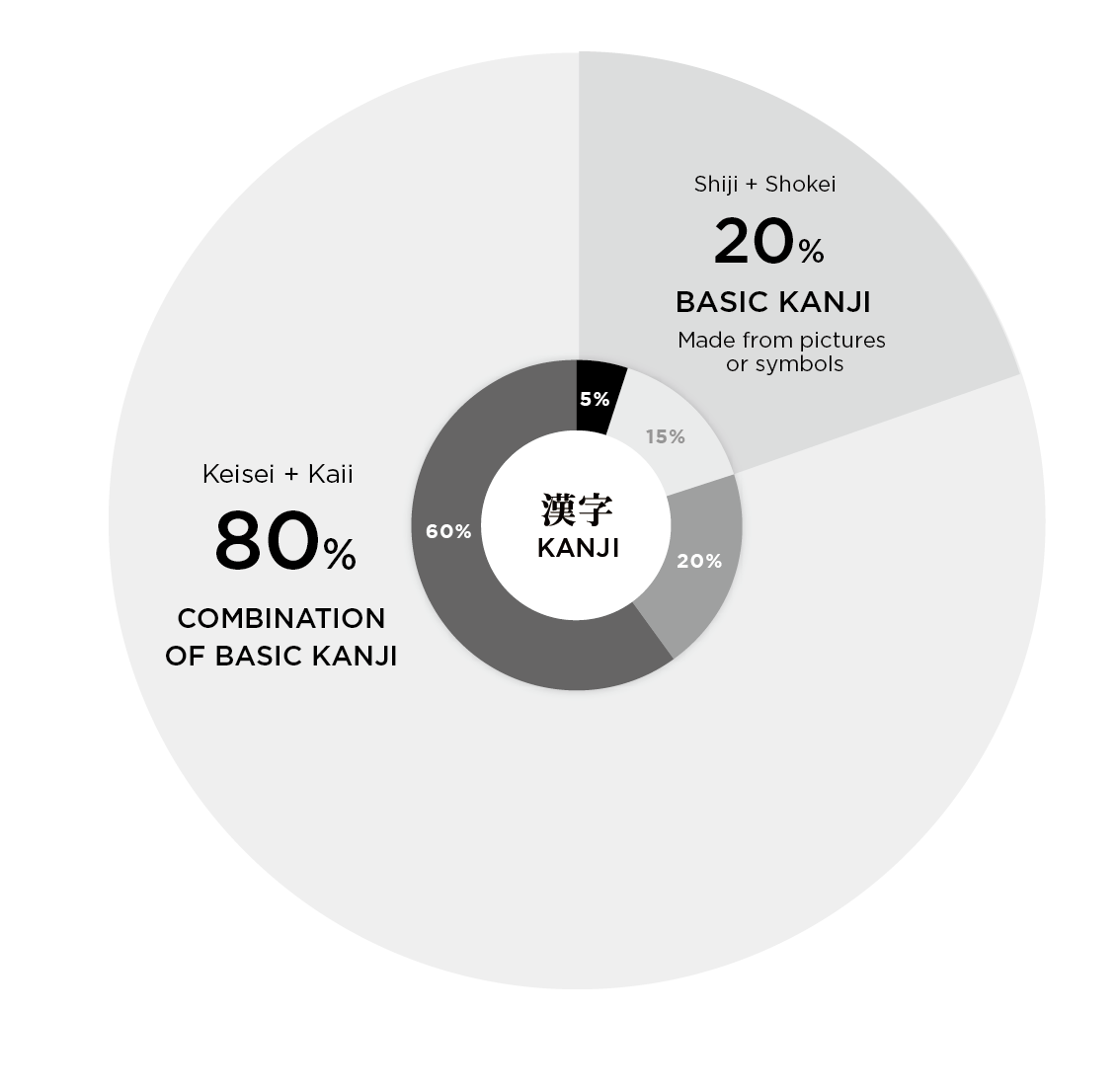
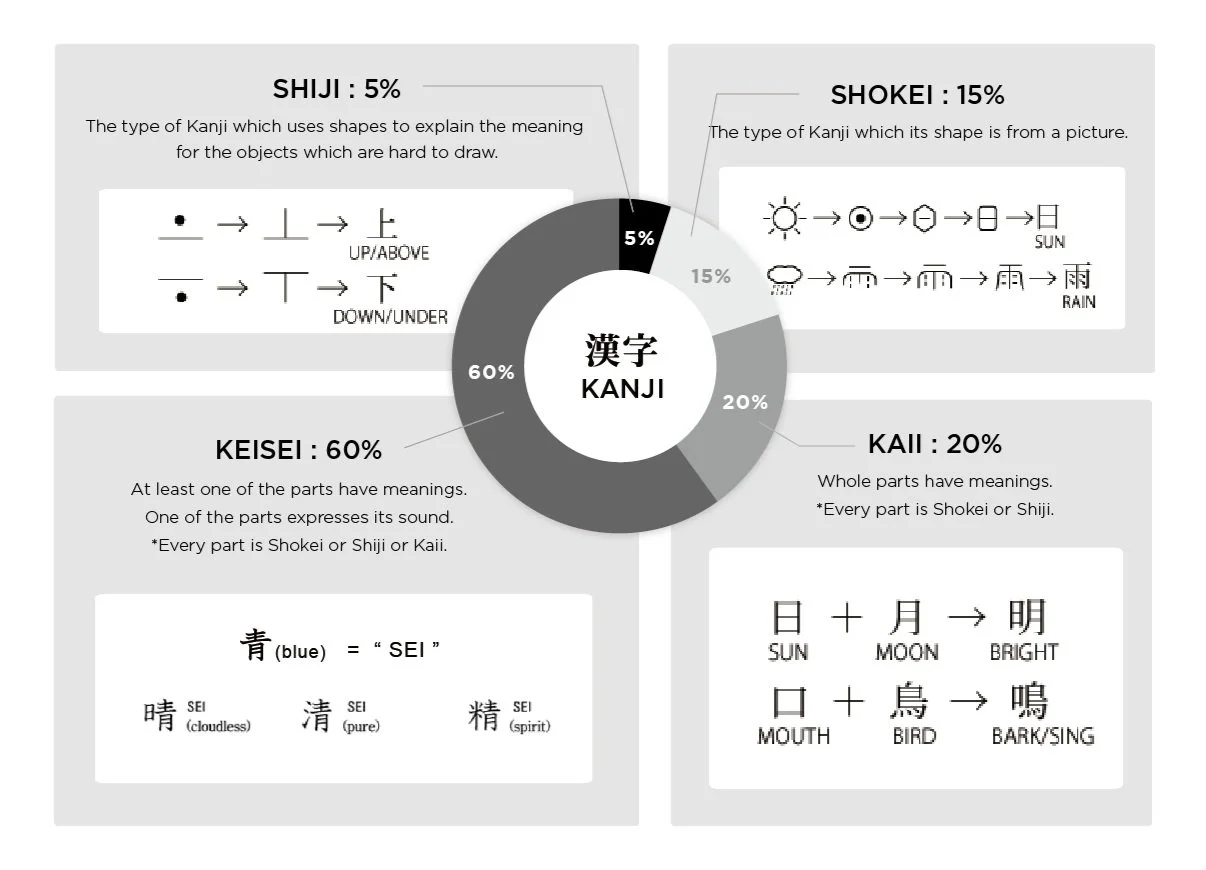
The 80/20 radical rule, as a puzzle
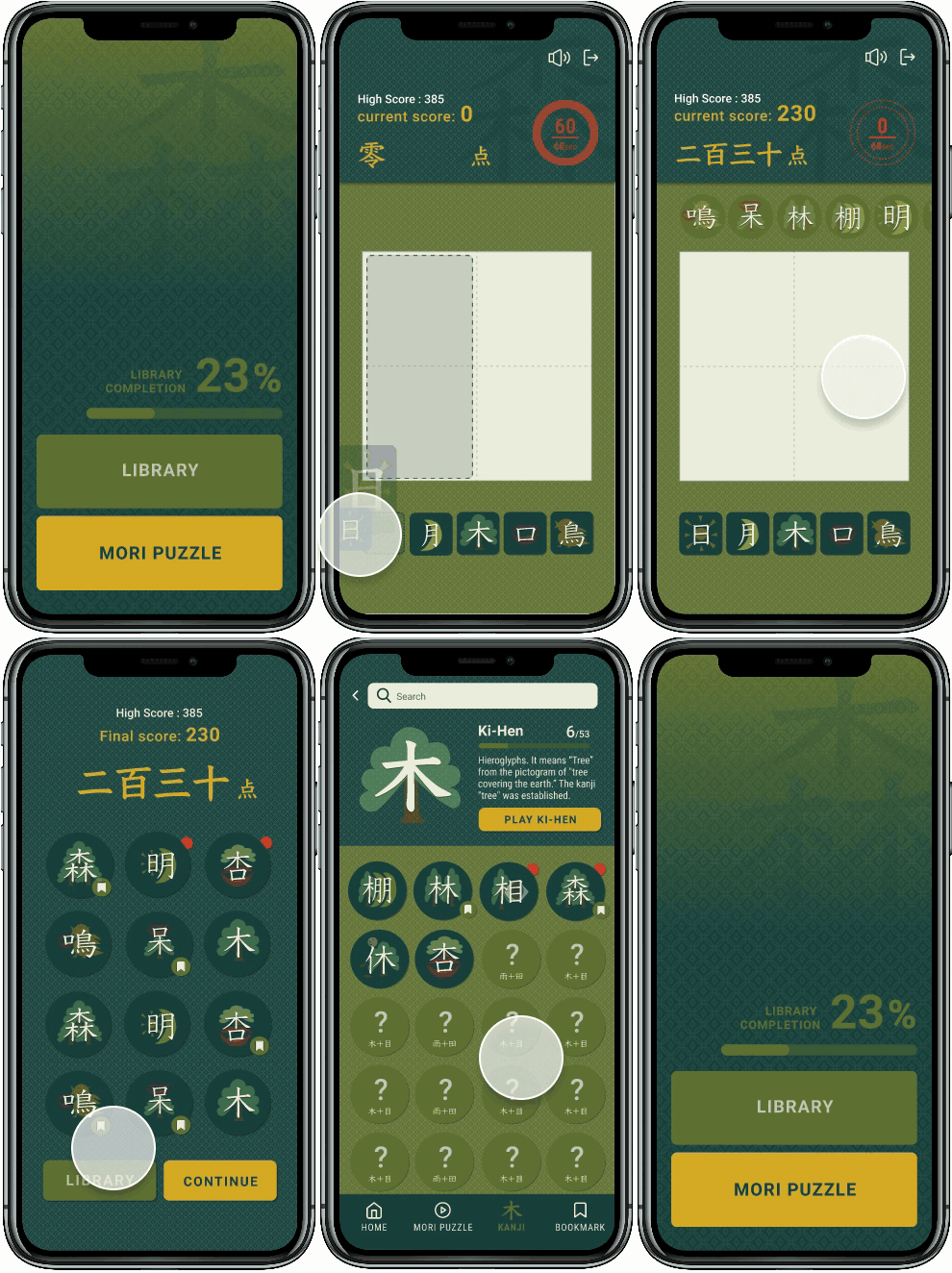
Instead of drilling each character by rote, the game asks players to combine parts into kanji. Every solved puzzle teaches structure, so the next unfamiliar character already looks half-known.
日 sun + 月 moon → 明 bright·Pictograph · SHOKEI
Squares are parts, circles are kanji — the same shape language used in the app’s Library.
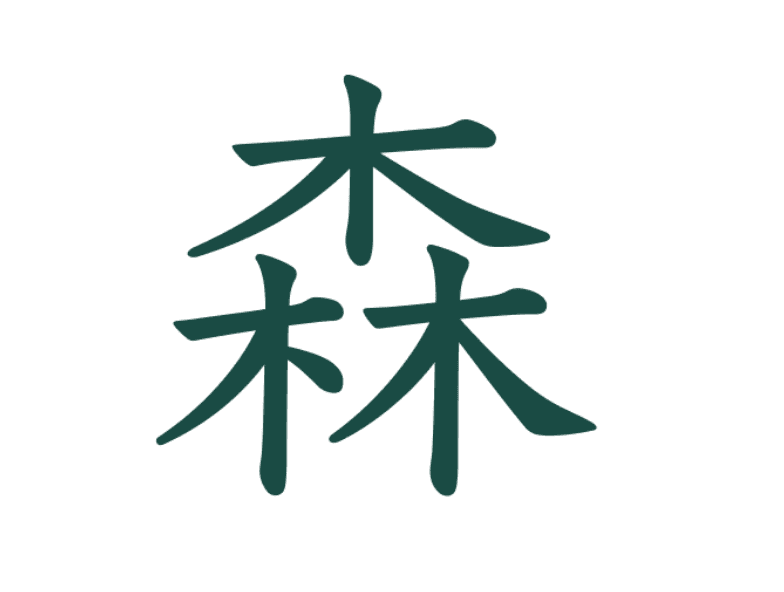
Why “Mori”
森 (mori) means forest — three trees, 木, grown into one character. It is the product idea in a single kanji: small pieces build on each other until they form something larger.
03
Competitive Heuristic Evaluation
I evaluated four apps against Nielsen Norman Group’s 10 usability heuristics, plus three criteria specific to the problem: Learning, Motivation and Interactivity.
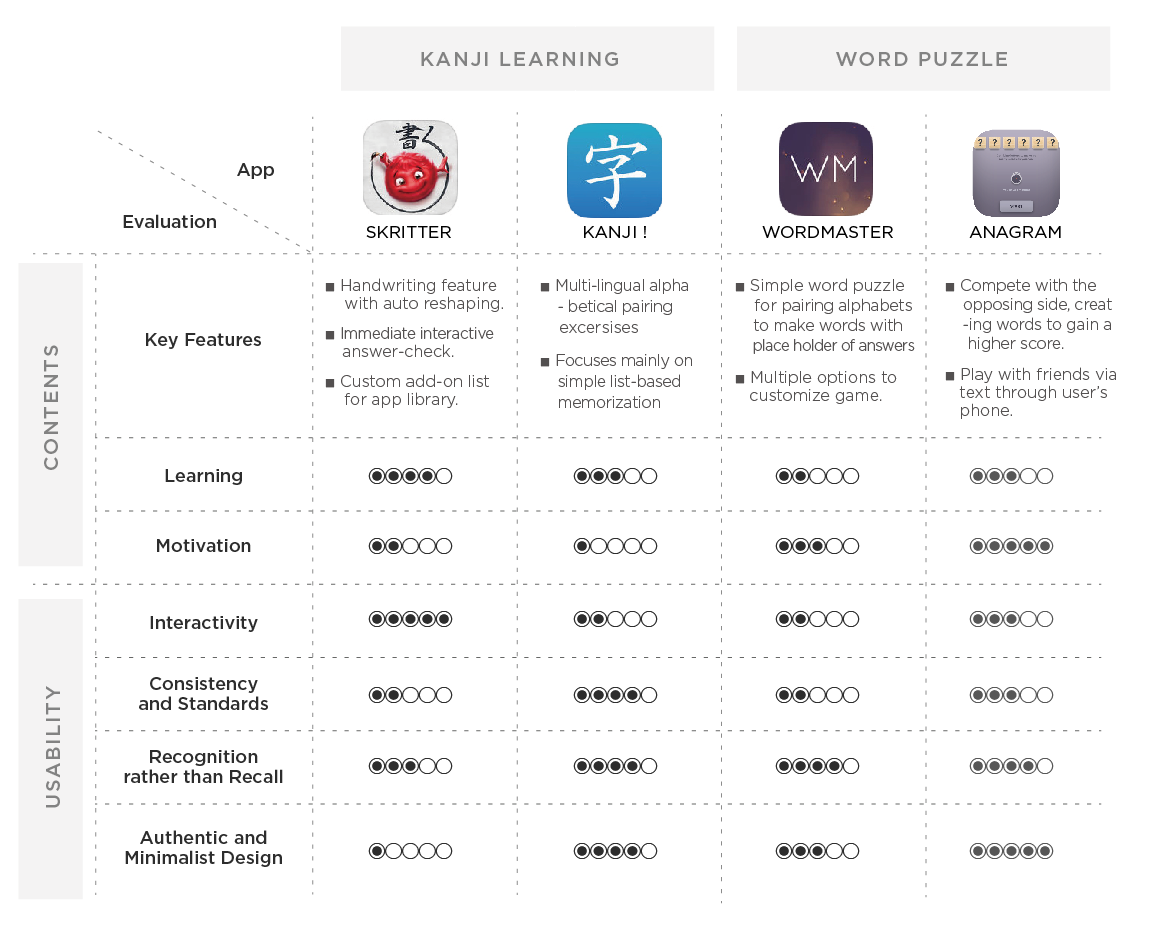
Kanji learning vs word puzzle apps, rated on content and usability criteria.
Opportunity
Pair a clean, game-like interface with genuine learning features, and borrow Anagram’s asynchronous battles for relaxed competition between friends.
04
User Flow & System Architecture
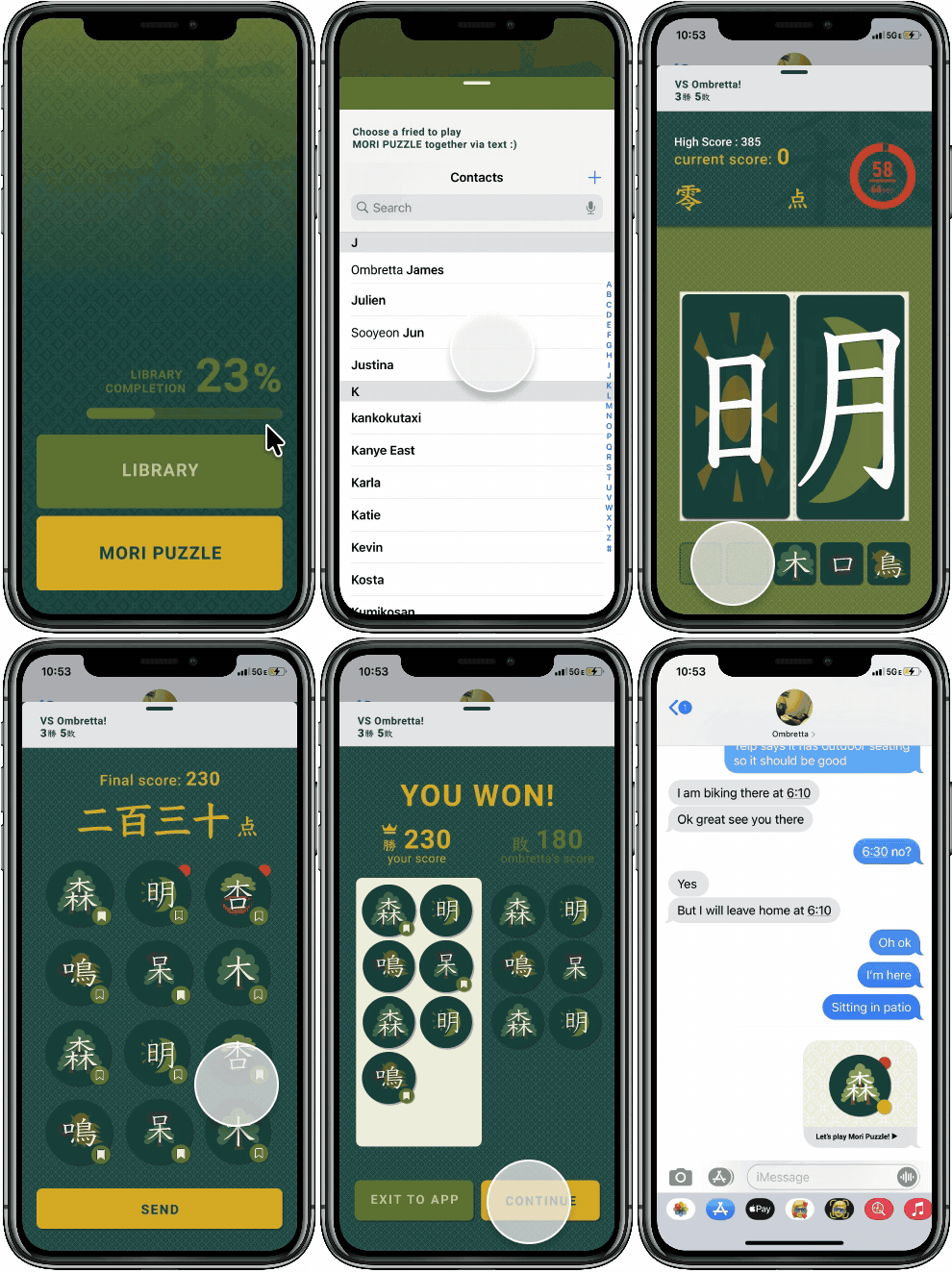
Each persona enters Mori through a different door. Single Play, VS Play and the Library form the three pillars, connected so that play and study feed each other.
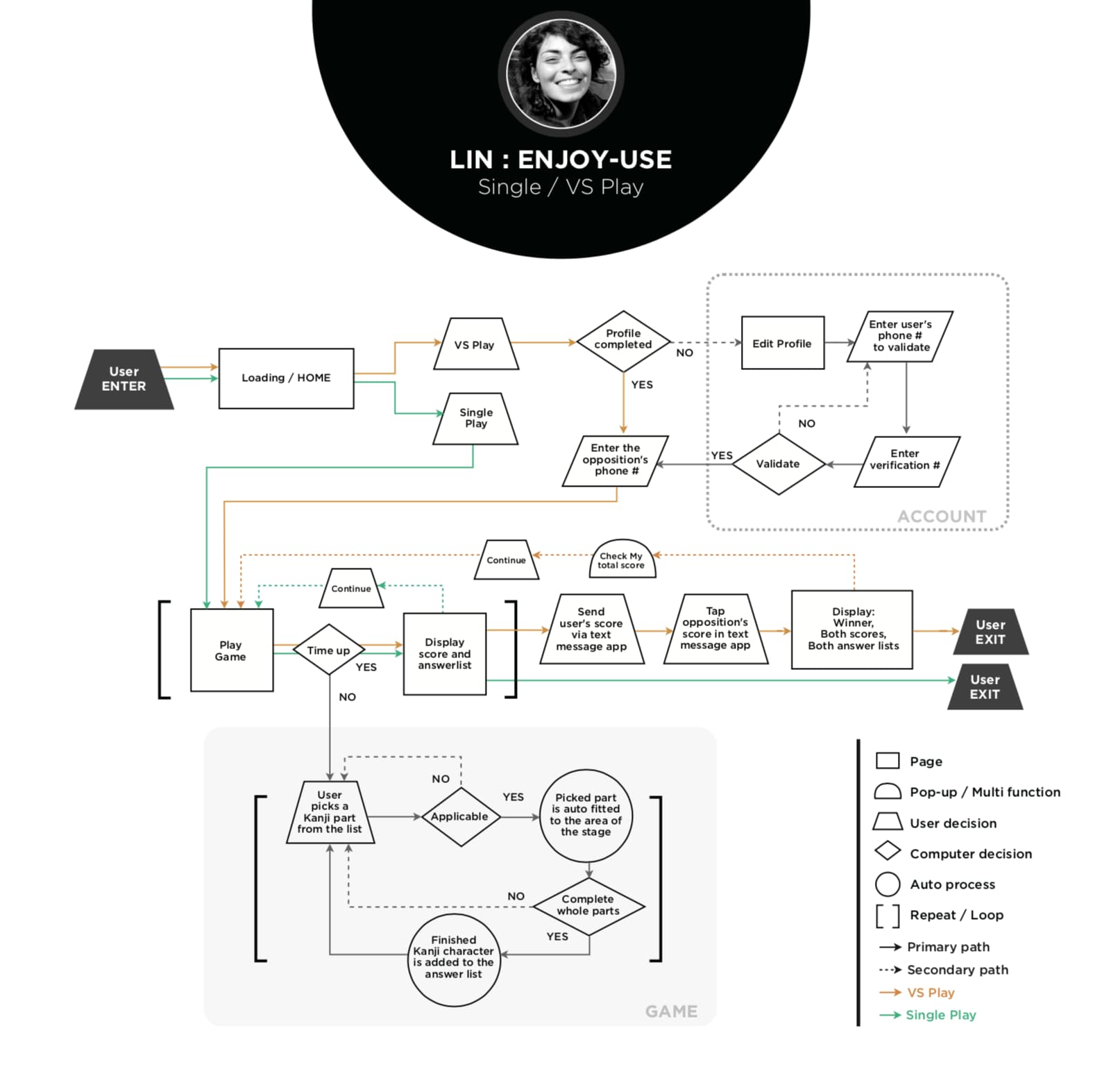
Enjoy-use: Single Play and VS Play.
05
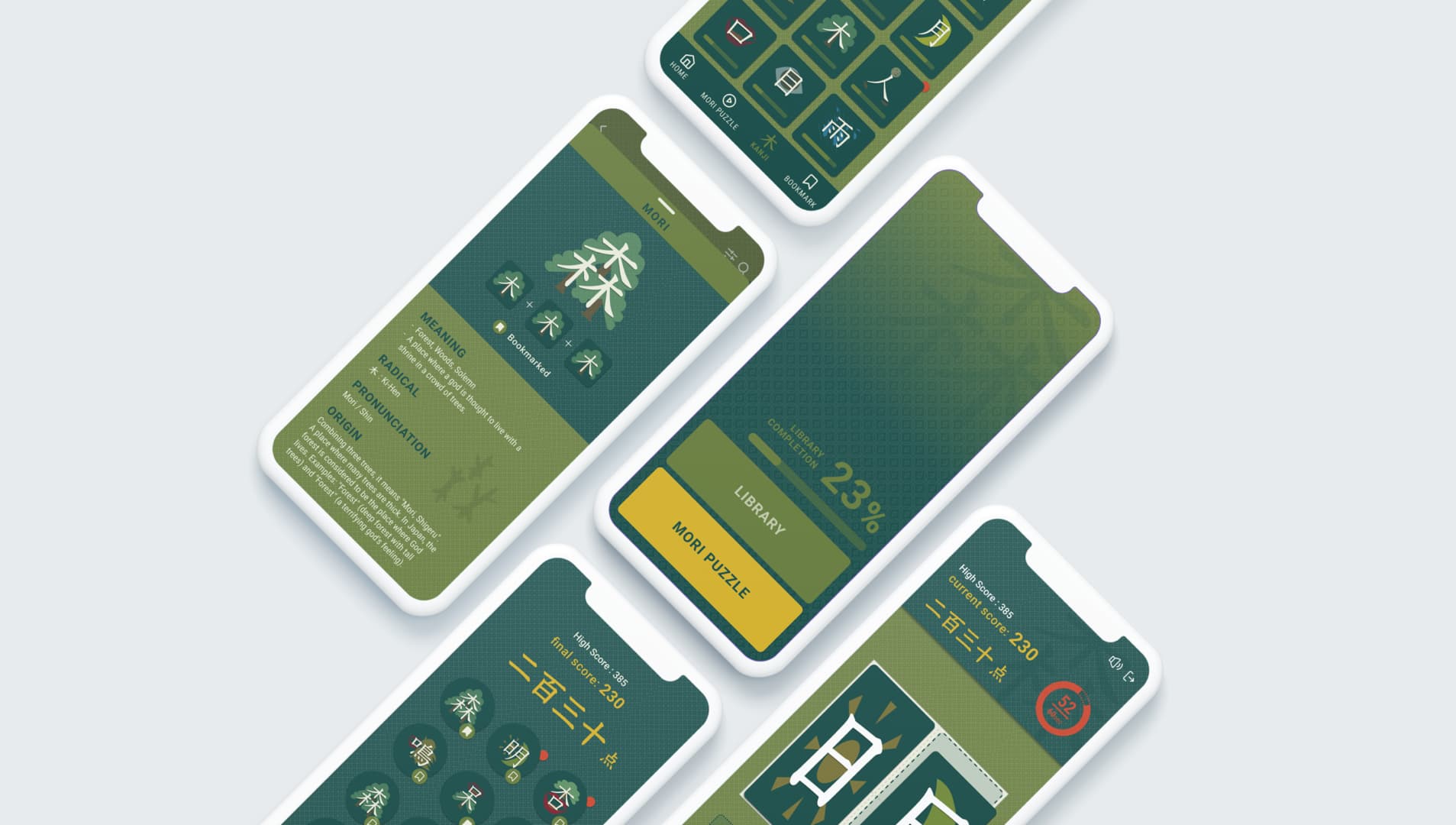
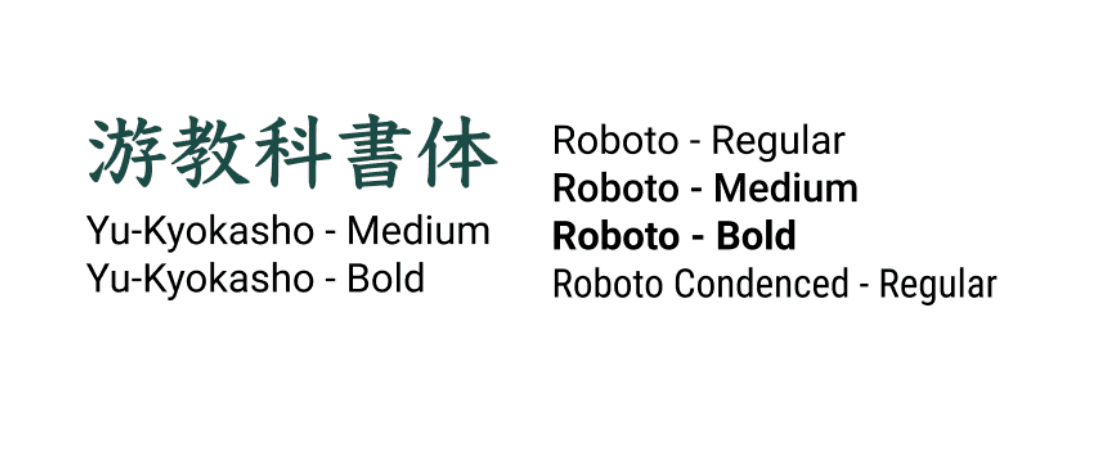
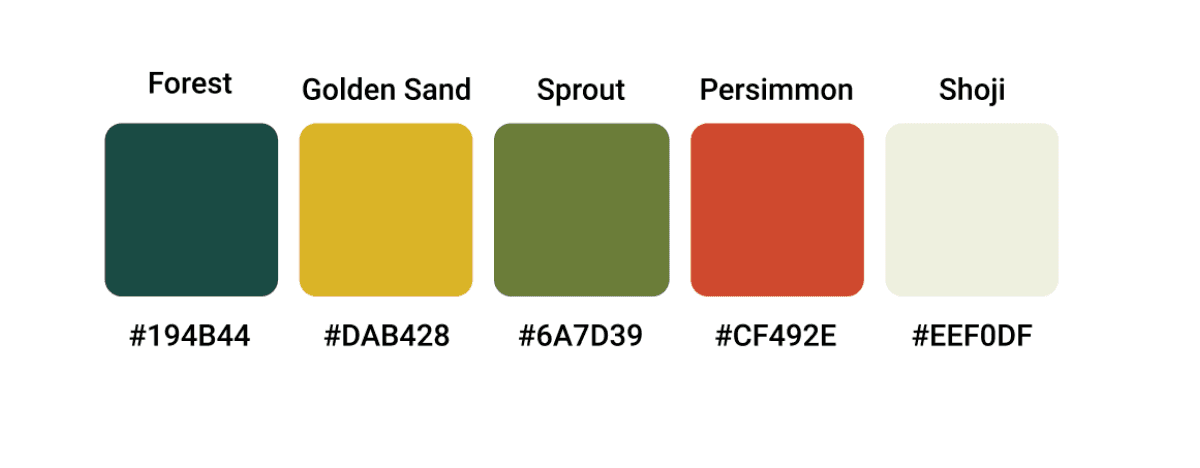
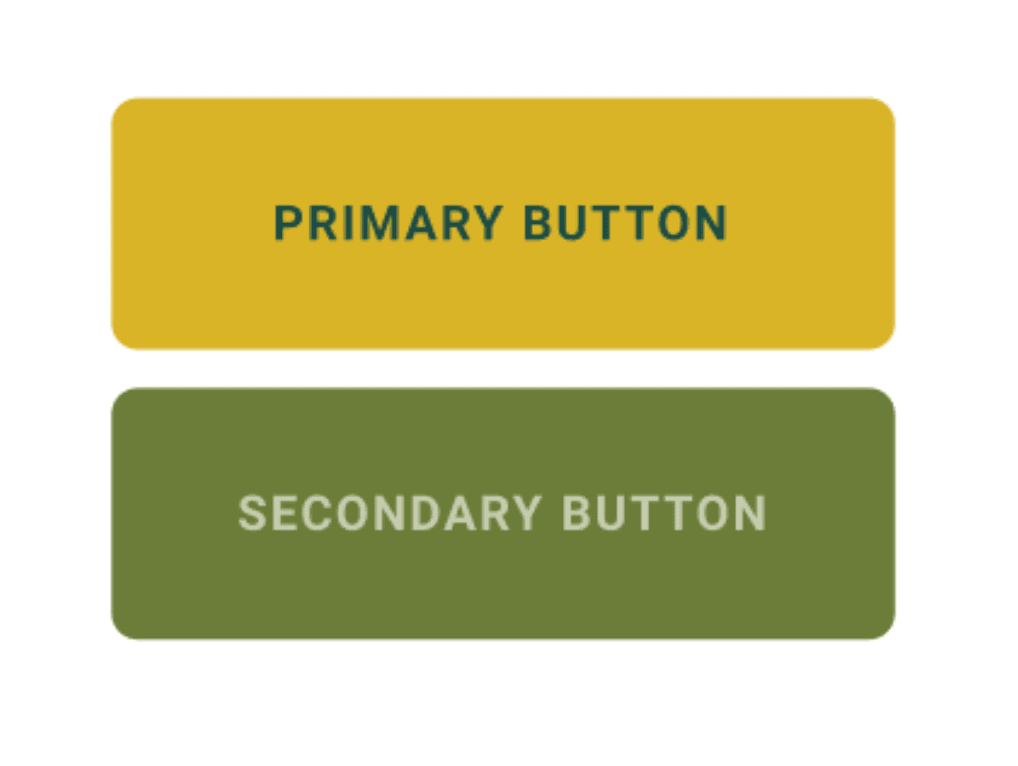
Style & UI System


06
Interactive Prototype
Watch Regular Play and VS Play in motion, or click through the live Figma prototype.